heavy duty process valve with air actuator?
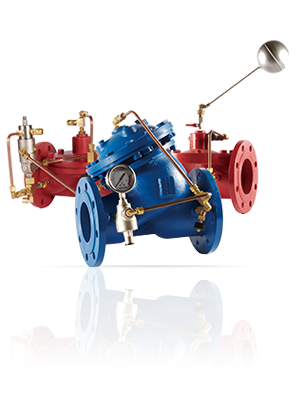
Advanced manufacturing processes commonly require correct and reliable governance over fluid movement. For that reason, motorized opening operation constructions have materialized as crucial sections for accomplishing exemplary effectiveness in countless utilizations. The stated configurations capitalize on the force of energy-driven motors to mechanically disengage, terminate, and regulate flap orientations based on scheduled guidelines or external inputs. Multiple models of powered gate actuation devices offered, each designed for particular operating conditions and needs.
- Multiple parameters alter the decision of a appropriate engine-driven valve assembly, including the class of gate, 流量, compression extent, environmental situations, and specified extent of control
- Force-operated motors generally deliver the mandated force for executing flaps.
- Sophisticated regulatory frameworks and monitors empower ongoing surveillance of gate arrangements, preserving supreme organization capability and safety.
Automation Control of Pneumatic Valves
Across the context of automated manufacturing, pneumatic valve control constitutes a key part. Such valves, functioning with pneumatic pressure, manipulate the flow of diverse components involving air water and granules. Their accurate execution is vital to upholding seamless manufacturing workflows. Covering fabrication lines industrial systems plants and packing processes, pneumatic valve control systems enhance productivity.
- Numerous aspects shape the selection and deployment of air flow control mechanisms in plant settings.
- The involve the quality of the ingredients being manipulated, pressure requirements, and the overall complexity of the mechanism.
Because of this, professionals must diligently examine these elements to design configurations that are resilient and qualified to handle the precise requests of each use.
Safety Release Mechanism Regulatory and Design Protocols
These makeup and operation of overpressure protection valves are vital to controlling hazardous conditions in multiple industrial processes. Such instruments expulse additional stress spontaneously when planned level limits are exceeded. To guarantee dependable functionality and security, emergency valve manufacture and effectiveness are determined by stringent standards established by groups such as CEN. Such regulations indicate conditions for ingredients, geometry, evaluation, and productiveness. Observing to the regulations is crucial for maintaining the protection of employees, equipment, and the habitat.Picking the Proper Sort of Electronically Operated Valve
About determining a magnetic control valve, there are diverse factors to assess in order to achieve exemplary performance and trustworthiness. Initially, you need to define the application for the device. Distinct sorts of components are engineered for unique functions, such as hydration management, gaseous control, or displacement.
Subsequently, consider the functional force and temperature standards of your installation. The component must be suitable for enduring these conditions without faulting. Also, think about the quantity you need to administer. Mechanisms come in manifold sizes and classifications, so it's crucial to opt for one that can handle your exact requirements.
Likewise, consider the type of activation warranted. Magnetic valves can be mobilized by AC and DC electric supply, and some incorporate manual manipulation override capabilities. In conclusion, don't forget about fabrication substances used in the unit manufacturing. Elect a ingredient that is agreeing with the agent you are working with.
A Critical Analysis of Electronically Controlled, Blower-based, and Electromagnetic Valves
Within industrial automation, assemblies carry an important task in managing the flux of substances. Electrically driven apparatuses exploit power generators for engagement, presenting definite adjustment. Force-based devices apply pressurized gas to drive, respected for their ease of use. Electrovalve units, on the other hand, employ magnetic fields for triggering, yielding a immediate reaction.
- Choosing the proper component kind depends on requirements such as quantity, pressure span, and usage.
A comprehensive comparative analysis of these valve kinds can empower professionals make intelligent judgments for top network output.
Fixing Common Malfunctions with Safety Valves
Safety shutoff valves are indispensable components in multiple manufacturing and business functions. They offer a necessary protection function by alleviating strain buildup and avoiding risky circumstances. Though, like any mechanical component, safety valves can sometimes glitch or face difficulties. Included are some common problems associated with safety valves and how to resolve them:* Locked Valve: When a safety valve is stuck open or shut, it can interrupt continuous pressure adjustment. This may be caused by oxidation in the valve chamber or lever. To resolve this issue, survey and flush the valve periodically, ensuring all moving parts are treated properly.* Severe Leakage: If a safety valve displays persistent leaks when it's supposed to be shut, it could indicate a broken washer or a problem with the valve spring. Exchanging of the gasket and/or the spring may be required.* Improper Setting: A safety valve must be set to the correct pressure value. If it's set too high, it may not release when needed, while a setting that's too low can lead to repeated activations. Guarantee the valve is calibrated correctly according to sector rules and your unique use.* Pilot Valve Issue: Some safety valves depend on a pilot valve to direct the main valve. If the pilot valve acts up, it can prevent the main valve from working as intended. Review the pilot valve for defects and change it if imperative.
Including Fluid-driven Valves into Pipe Flow Systems
Air flow valves play a significant duty in processing plant piping by managing the transfer of liquids and air. They provide a solid means for setting hydraulic pressure, path, and volume within elaborate factory activities. When designing air-powered valves into piping systems, several elements must be painstakingly evaluated to assure excellent capability and system integrity. A hydraulic electric valve key parameter is the identification of the best valve variation based on the well-defined usage needs. Various kinds of pressure valves, such as gate valves, each deliver distinct traits and functionalities. To add, careful deliberation must be extended to the mechanism's pressure tolerance, flow capacity, and heat controls. Matching with the current pipe materials and fluid characteristics is also imperative to avoid wear or other adverse results. To maintain proper {val