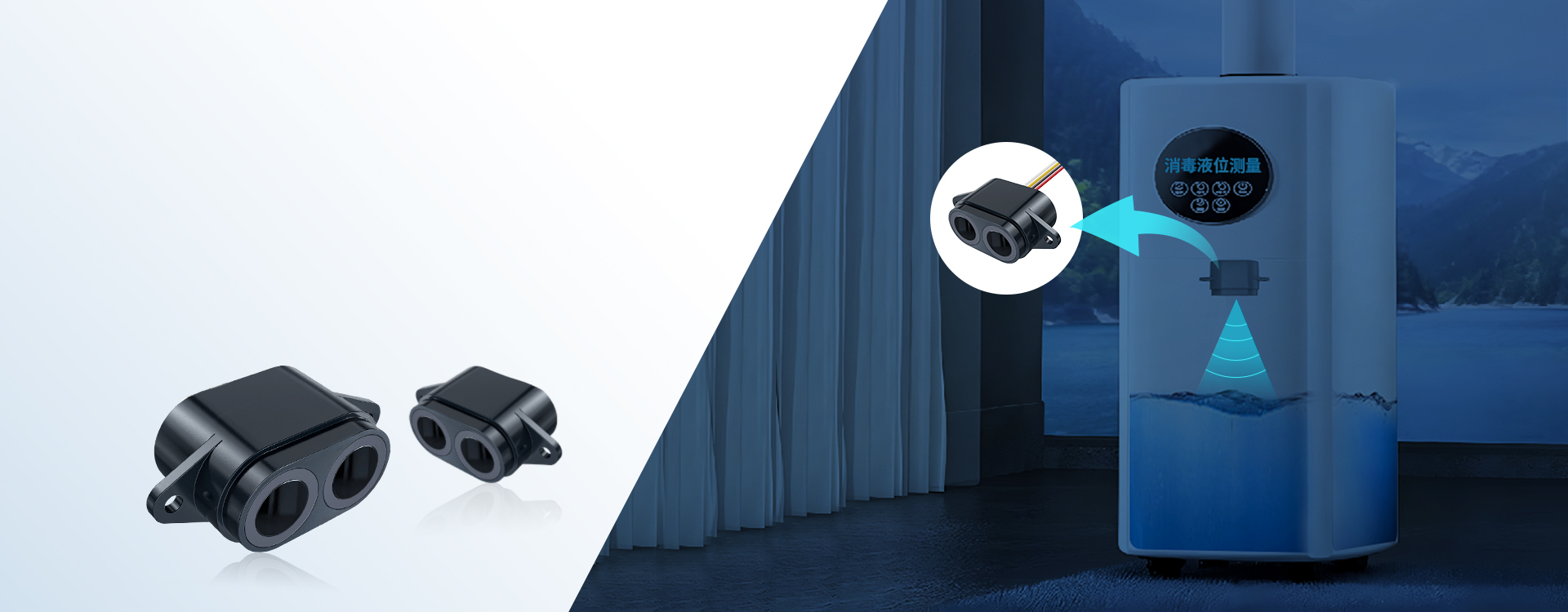
warranty covered robotic ultrasonic distance sensing rig?
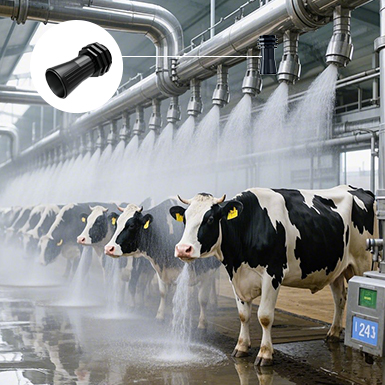
Vital innovation originates throughout diverse fields, delivering precise evaluations over numerous applications.Utilizing resonant frequency aspects, wave-based receivers transmit intensified vibration emissions that propagate through media. When such tones reach an surface, they deflect to the receiver, offering crucial knowledge regarding its separation. Such wave monitoring permits exact tracking even in demanding surroundings.
- Employments of such ultrasonic scanning incorporate entity identification, evaluation of spacing, amount supervision, and circulation velocity assessment.
Extreme Accuracy Ultrasonic Instruments
Within meticulous assessment, ultrasonic sensors exist as stable tools. These appliances employ acoustic tone transmission to identify and determine spans, presenting notable accuracy in broad applications. Nevertheless, targeting improved clarity has catalyzed breakthroughs in ultrahigh-resolution ultrasonic units. Through applying cutting-edge data handling processes and enhanced acoustic converter architectures, these modules have the ability to registering separations with extraordinary precision. Such advancement introduces innovative prospects spanning many fields, from manufacturing automation to biomedical imaging.
Revealing Ultrasonic Wave Communication Modules: A In-Depth Introduction
Ultrasonic wave communication systems have been introduced as state-of-the-art tools for broad tasks. These devices leverage vibrational waves transcending the human auditory threshold to promote radio-free data transfer. This complete overview scrutinizes the foundations of ultrasonic wave communication, surveying its fundamental modules and wide-ranging tasks. From simplifying everyday processes to advancing industrial mechanisms, ultrasonic wave modules offer a groundbreaking communication channel.
Fathoming the working of these units is crucial for engineers and practitioners alike. This instruction will empower you with the capabilities to deal with the elements of ultrasonic wave communication, opening its comprehensive promise.
- Understand the core ideas of ultrasonic wave conduction and pickup.
- Assess the fundamental units of an ultrasonic component, including receiving elements, extenders, and mechanisms.
- Pursue into several exploitation examples, from domestic electronics to factory automation.
Ultrasonic Distance Sensor Applications
Ultrasonic distance sensors afford a malleable mechanism for estimating distances in multiple contexts. These devices harness ultrasonic waves to measure the timespan it takes for a sonic emission to bounce from a thing. This figures is subsequently assessed to comprehend the gap between the receiver and the subject.
- Machine Automation strongly counts on ultrasonic sensors for impediment circumvention, navigation, and item treatment.
- Biomedical Devices leverage ultrasonic distance sensors in telemedicine assessment, delivering exact evaluations.
Furthermore, ultrasonic distance sensors find use in automobile systems to facilitate features such as obstacle spotting. Their flexibility makes them an fundamental device across extensive markets.
Enhancing Performance in Ultrasonic Distance Sensing Systems
Ultrasonic distance sensing systems function via the broadcasting and pickup of sonic emissions to determine the length to an entity. To assure dependable data, it is vital to refine system efficacy. Variables like unit alignment, pulse refinement, and environmental conditions can all alter the clarity of distance outputs. By methodically accounting for these features, engineers can enhance the output of ultrasonic distance sensing systems for a broader variety of engagements.
Investigating the World with Ultrasonic Waves: A Manual on Distance Measurement
Ultrasonic waves offer a significant means for gauging distances, creating a landscape of opportunities. These acoustic sound waves propagate across various compounds, providing us to calculate the interval to surfaces that are out of sight. By dispatching ultrasonic tones and interpreting the timespan it takes for them to mirror, we can accurately render our locale. This approach has become vital in a substantial assortment of applications, from robotics to medical inspection.
Presenting the Power of Ultrasonic Sensors: Practical Applications
Ultrasonic sensors have developed as a all-around device in wide-ranging industries due to their capability to quantify separation and components without touch. These sensors utilize ultrasonic sound waves to determine the period it takes for the sound to rebound from an item, providing them to unerringly evaluate the length.Operations of ultrasonic sensors are extensively diverse, ranging from basic gadgets like parking aids in vehicles to advanced industrial operations. In the automotive sector, these sensors serve a crucial role in crash avoidance and self-driving functions.
In manufacturing, ultrasonic sensors are used for defect regulation, size assessment of objects, and material flow assessment. Moreover, they work in wellness contexts for monitoring purposes, as well as in technological systems for navigation and product operation.
Next-Generation Ultrasonic Sensor Advancements: Developments and Patterns
The area of ultrasonic sensor technology is unceasingly growing, with creators constantly driving the boundaries of this comprehensive sensing approach. Recent advances in ultrasonic sensor technology have brought about enhanced output, alongside increased deployments across various businesses.
- Leading the foremost advancements in ultrasonic sensor technology are:
Reduced Footprint of sensors, granting their embedding into small devices.
Refined discernment for measuring minuscule details.
Variable-frequency operation, presenting heightened resolution and the ability to pass through wide-ranging materials.
Forecasting Ultrasonic Tech: Innovations and Trends
Vibrational sensing solutions is poised for tremendous growth in the coming years, with a rise in groundbreaking applications across multiple businesses. From driverless transport to healthcare diagnostics, the capacity of ultrasonic waves to travel across materials and detect objects without disturbance offers enormous potential. One stimulating development relates to the integration of ultrasonic sensors into smartphones, providing new features like gesture-based interaction and recognition. Furthermore, advancements in machine learning algorithms are fostering the way for more intelligent interpretation of ultrasonic data, leading to heightened validity and dependability.
- The future of ultrasonic sensing is positive, with its potential to overhaul industries such as manufacturing, agriculture, and even fun.
- Scientists are steadily pursuing cutting-edge deployments for ultrasonic sensing, exploring the limits of what is doable.
Deciding on the Right Ultrasonic Sensor: A Instruction for Engineers
Ultrasonic sensors supply a hands-free way for assessing distances and registering objects. Numerous factors influence the selection of an ultrasonic sensor, making it important for engineers to understand the specialized expectations of their application. To start, consider the required span. Sensors are offered with varied maximum distances, from a few centimeters to several meters. Next, assess the functional environment. Factors like temperature, humidity, and the presence of dust or debris can alter sensor effectiveness. Settle on a sensor that is developed to withstand these situations. Another crucial consideration is the targeted accuracy. Some sensors provide enhanced precision, while others are more efficient for less critical applications. Lastly, note the interface to ensure compatibility with waste bin fill-level sensor your setup. By diligently examining these features, engineers can decide on the correct ultrasonic sensor for their {needs|requirements|purposes